NIF Organizing Committee
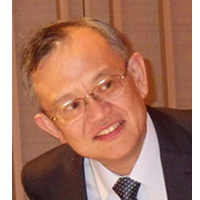 Chair of the 2020 committee
Tomohiro Kurosaki
(IFReC, Osaka University)
 Committee member
Shizuo Akira
(IFReC, Osaka University)
 Committee member
Naganari Ohkura
(IFReC, Osaka University)
 Committee member
Kazuhiro Suzuki
(IFReC, Osaka University)
 Committee member
Wataru Ise
(IFReC, Osaka University)
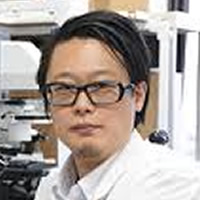 Committee member
Takashi Satoh
(IFReC, Osaka University)
 Chair of the 2019 committee
  Committee member
Florent Ginhoux
(SIgN)
 Committee member
Siew Cheng Wong
(SIgN)
 Committee member
Lisa Ng
(SIgN)
 Committee member
Nicholas Gascoigne
(NUS)
 Committee member
Christiane Ruedl
(NTU)
Organizers
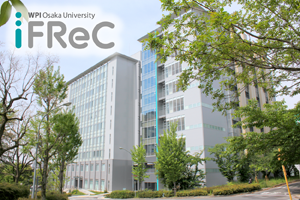 Immunology Frontier Research Center
Osaka University Immunology Frontier Research Center (IFReC), directed by Prof. Shizuo Akira, was selected by the Japanese Ministry of Education, Culture, Sports, Science, and Technology as one of the nation's five elite World Premier International (WPI) Research Centers. Since the WPI program was established in 2007, IFReC has engaged in high-level research that is expected to make it an internationally renowned immunology research center. The science of immunology explores the mechanisms by which the immune system protects the body against pathogens such as bacteria, fungi, and viruses. Because the immune system has evolved to eliminate non-self, it causes rejection of transplanted organs; moreover its malfunction can give rise to various immune disorders including allergies, cancer, and autoimmune diseases. The scientific goal of IFReC is to contribute to a more comprehensive understanding of the dynamics of the immune system by employing not only traditional immunology experiments, but also a variety of imaging and bioinformatics technologies. To this end, IFReC has recruited a diverse team of imaging and informatics scientists. These efforts will enable immunologists to directly track the dynamic behavior of immune cells and their cell-to-cell networks in order to clarify how immune cells respond to pathogens and cancers in vivo.
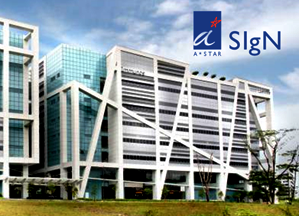 The Singapore Immunology Network
The Singapore Immunology Network (SIgN) was conceptualized in 2005 and established in 2006 by the Agency for Science, Technology and Research (A*STAR) with the aim of expanding and strengthening immunology research in Singapore. By January 2008, a new 6,000 m2 laboratory and office space was officially inaugurated as the home of SIgN, in the Immunos building at Biopolis, under the executive leadership of Professor Philippe Kourilsky and scientific directorship of Professor Paola Castagnoli. SIgN is presently led by Professor Laurent Renia, Executive Director. SIgN's mission is to advance human immunology research, contribute scientific knowledge and make innovative discoveries to improve lives and further socio-economic growth. SIgN is committed to translate research findings into clinical and commercial applications, in partnership with clinics and industry.
SIgN is home to ~210 national and international researchers and support staff working under 20 renowned Principal Investigators under the directorship of Professor Laurent Renia. The current SIgN researcher groups may be broadly categorized into three main areas of focus: Infectious Disease, Cancer and Immune Dysfunctions. Our researchers also have key interests and expertise in Inflammation, Immunotherapy, Aging, Allergy and Skin Disease.Our research activities are supported by a strong in-house cluster of cutting-edge technology platforms. SIgN is committed to lead in immunology research and nurture research talents. At SIgN, all researchers can expect a stimulating environment that promotes analytical thinking, interdisciplinary collaboration and entrepreneurial spirit.